Serving USA & Canada | 978‑486‑3116 | Current pricing valid through October 1, 2024 due to ongoing tariff and vendor rate changes. Order now to lock in current rates before the next update.

Call our team at Louis Page: 978-486-3116 | Free Quote

The Fence Post

What Is High Tensile Wire Fence?

June 25, 2013 | by Rick Hoffman


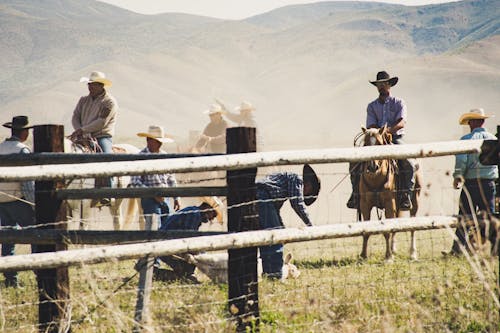
Cowboys Riding a Horse Near Gray Wooden Fence Taken during Dayitme

A Preferred Choice for Controlling Livestock

High tensile wire is regarded as the most significant improvement in farm fencing since the introduction of barbed wire in 1874. While relatively new in the US, it has been used to effectively control cattle, sheep, and other livestock on ranches in other countries for over 50 years. It has now become the preferred choice for agricultural fencing in the USA.
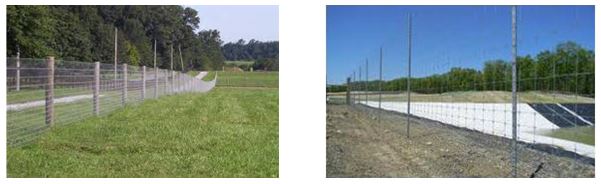
high tensile wire fences

Low vs. High Carbon Content

Low carbon wire is made from steel rod with a carbon content of approximately 0.10%. This type of wire is easy to work with and fairly forgiving. However, it is prone to elongation, falling victim to stretching and sagging. And its strength is low when compared to high tensile wire.

High tensile wire is made of higher carbon steel. The carbon content of this wire is approximately 0.28%. This increased carbon content significantly increases the wire’s strength and reduces elongation. This allows the use of a smaller diameter high tensile wire versus a thicker low carbon wire.

High tensile wire fence: Advantages

  • Lower overall costs due to smaller diameter wire and fewer posts used
  • High tensile wire can be installed using fewer fence posts than low carbon fence
  • High tensile: post spacing up to 16.5 feet vs low carbon: post spacing 8 to 10 feet
  • Stronger – about twice the strength as low carbon wire for effectively controlling any type of livestock: horses, hogs, cattle, deer, sheep, goat, etc.
  • Lighter weight means easier handling during installation
High tensile fences remain tight for years – even if a tree falls on a high tensile fence, it will spring back to shape once the tree is removed.
 
So many benefits:                                                                                         
  • Very low maintenance
  • Longer life – 40 plus years if properly maintained
  • Can be easily electrified
  • More secure
  • Looks neater
  • Much safer for livestock than barbed wire
  • Class 3 galvanizing is standard

With high tensile wire, build a long-lasting, low maintenance fence for nearly half the price of a conventional low carbon fence. Make sure you know that the wire you're getting is high tensile--call Louis Page for details.

Download the woven Deer Fence brochure!

Rick signature  Rick VP sales Louis E. Page, Inc.      

Read More

Topics: high tensile wire, galvanized

Apron Fence--Protect Your Pets and Garden

May 21, 2013 | by Rick Hoffman

Mean dog behind fence

Is it Time for an Apron Fence?

Although the name "apron fence" might make this product sound like kitchen garb, it is actually a versatile and uniquely designed fence that is ideal for a host of different applications. 

The Hinged Apron
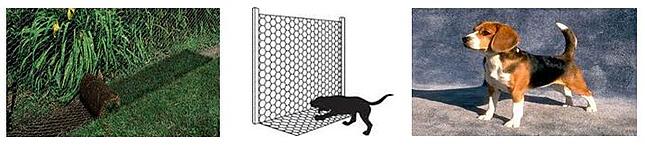
What makes apron fence unique? It is designed with a 12” hinged apron that can be turned 90 degrees in either direction to prevent animals from burrowing underneath. For example, to prevent Beagles from digging underneath the fence to get out, place the apron inside the perimeter of the fence. To prevent raccoons, foxes, and other predators from burrowing underneath and getting in, place the apron outside the perimeter of the fence.
 

No Trench

Since there is no need to dig a trench (a time bandit hassle), installation is quick and easy. Simply place the apron on the ground and cover it with soil or grass for a neater appearance. Vegetation will grow up through the mesh, securing the fence to the ground.

Perfect for Beagles etc.

Apron fence is ideal for beagle training pens, running pens, kennels, as well as game bird pens and chicken pens. Great for a garden fence because it protects the garden from hungry wildlife looking for a free and tasty meal!

Apron fence and beagle

Choose Galvanized or Vinyl-Coated

Apron fence is made of 17 gauge galvanized steel 1½” hex wire, making it more than twice as strong as standard 20 gauge 1” hex chicken wire. This greater strength and durability provide longer life. Made in the USA, it is available in two sizes – 60” (48” fence height, 12" apron) and 72” (60” fence height, 12" apron) and in galvanized or vinyl-coated finish.

Long-Lasting, Flexible, and Attractive

The vinyl coating is bonded to the wire and is UV stabilized for long life. The black vinyl coating is more attractive and blends into the background, becoming nearly invisible; plus, you can easily see what is inside the fence, enhancing the perspective of your garden. Paying more upfront for vinyl coating will save money and time in the long run because it will last years longer than the galvanized, and will eliminate the expense and hassle of replacing the fence.

Whether your objective is keeping animals in or keeping them out, Apron Fence will exceed expectations!

Download the Apron Fence brochure!

Rick signature Rick VP sales Louis E. Page, Inc.

Read More

Topics: apron fence, vinyl coated wire, galvanized

How To Install Deer Fence - Video

March 4, 2013 | by Duncan Page

Tornado deer fence 

Straight Lines and Proper Tensioning

What is the process for installing a deer fence? This video from Tornado Wire in the UK will show you how, including: pounding the posts, tensioning and tying off the line wire, installing a brace post, placing and driving intermediate posts, tying off fence material, final tensioning, and stapling. Look and learn how it's done in the UK. 

Tornado has introduced high tensile wire to the UK. Their complete line of agricultural fence products is produced in their own manufacturing facility in the town of Alcester, county of Warwickshire, England.

Deer and Wildlife Fence

Read More

Topics: deer fence, video, galvanized

Deer Fencing Strategies

October 11, 2012 | by Don Hillis

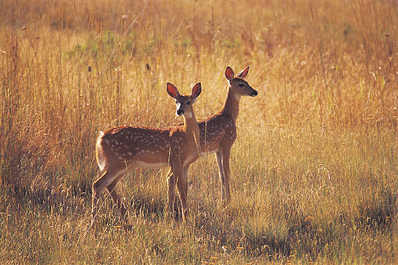
deer standing in field

Integrated Pest Management Strategy

Deer prefer to eat plants with soft leaves and fruit. It is not unusual for a deer to go through 5 to 10 pounds of plant matter a day. Some of their food sources include fruit trees, rhododendrons, maples, and oak. Once deer establish a pattern of behavior it is very hard to break. However, this scenario might have been avoided using an Integrated Pest Management strategy. For instance, some of the methods for reducing deer damage are population control which involves hunting, trapping, and introducing contraception to reduce the herd. Hunting is less expensive. But most areas have communities that are more tolerant of deer and the damage they cause and are against hunting them.

Reducing Damage

Education is vital for preventing and managing deer problems. Understanding the biology and ecology of the species of deer in your area is important in finding alternatives that could reduce the damage caused by deer. You should be aware of the areas they gather in and the times as well as the size of the herd. Learn the identity of the plants and vegetation that they prefer. This information can prove helpful in selecting a method for controlling damage. Before selecting your method, try to have a goal in mind of what you want to accomplish.

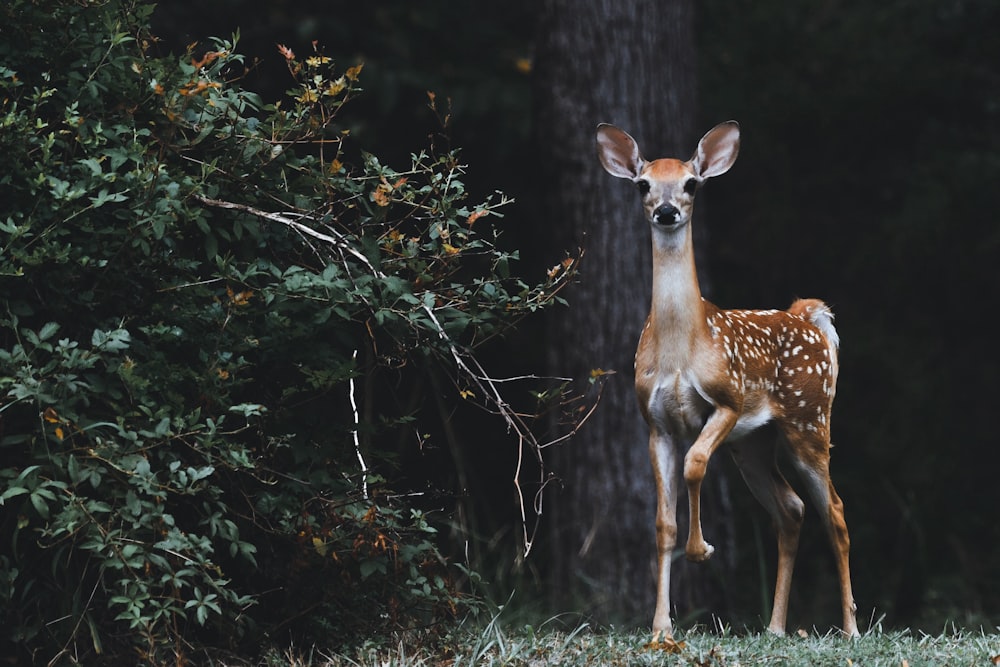
deer pointing forest

Height vs. Electricity

Repellents can be used on plants to discourage deer from eating them. They work by affecting the smell or taste and making it difficult for deer to eat. Sometimes, deer will still eat the plants if they are hungry enough.

Scare devices or noise-making devices that are produced using gas exploders, dogs, blank gunfire, and fireworks.

Fences are the most popular control method. Fences are usually limited to small areas such as orchards, gardens, high-value crops, or areas where deer are particularly abundant.  There are two general categories: passive and active exclusion.

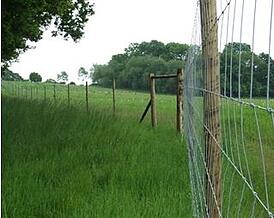
  • Passive exclusion fences are woven wire fences that are too tall for deer to jump. They are at least eight feet high since deer can normally jump anything less than eight feet. A well-designed and effective fence will consist of 12-foot posts placed at 40-foot intervals and set to a depth of 4-feet, with woven wire attached to the posts. The bottom of the fence should be at ground level.
    • Two 4-foot widths of wire fencing joined one on top of the other and attached to the posts can be used to keep deer out. You can also use an 8-foot tall deer fence. If a taller fence is desire, a strand of high tensile electrical wire can be strung above the woven wire.
    • A fence that slants away from the area to be protected is a very effective design as well. These particular structures are often permanent and can protect an area year-round and should last at least twenty years. This method is recommended for areas that have recurring problems with deer damaging crops.
  • Active exclusion fences use electricity to keep deer out of an area. The smell or appearance of the fence attracts the deer but when they touch the fence with their noses, they receive an electrical shock. This conditions the deer to avoid the fenced area. These fences are less expensive to construct than exclusion fences but are sometimes less effective because hungry deer can learn to jump over them. These fences also require more maintenance.
Most fence structures will help limit damage to individual trees. Position plastic mesh tubes around small saplings. Place cylinders of welded wire mesh at least six feet tall around larger trees to protect from antler rubbing by bucks.

When you have the right fencing system in place to protect your orchards or plants, you can be sure the “buck” stops here!

Deer and Wildlife Fence

deer behind fence

Read More

Topics: deer fence, galvanized, fixed knot

How Do You Make Art Out Of Chicken Wire?

October 1, 2012 | by Duncan Page

Sculptures Made with Chicken Wire?

There are many different uses for chicken wire. It is much more versatile than you might expect. Here, a unique practice is crafting the hexagonal netting into sculptured works of art. Ivan Lovatt, a sculptor from Australia, has created a stunning collection of artwork. Using galvanized chicken wire, he has made representations of both people and wildlife. A bust of John Lennon? Bring it on. This type of chicken wire is moldable with a neutral yet characteristic sheen. The small, light gauge mesh allows him to bend, fold, crease, and cut the mesh into its final shape. The result is an amazingly life-like rendition. Take a look at this video and see what you think:


A Wide Variety of Applications

The most common specifications of chicken wire available are made using 20 gauge wire woven into 1" or 2" hexagonal mesh. Other types available are ½" x 22 gauge, 1" x 18 gauge, and 1½ x 17 gauge.

Finishes available are: galvanized before weave (GBW), galvanized after weave (GAW), PVC vinyl coated (VC), and stainless steel. Not all specifications are available in all finishes.

This fencing material is ideal for use around the home, farm, and in industrial applications - any place where a lighter weight mesh can be used. Here are some conventional uses:

  • deer fence
  • craft projects
  • stucco netting
  • window guards
  • game bird flight pens
  • garden perimeter fence
  • tree and shrub protection
  • holding insulation in place
  • exclusion barriers for birds
  • chicken runs and poultry houses
  • trellis for climbing plants & flowers
  • backing mesh for post and rail fence
  • framework for sculpture and float decorations

Yep, not just for chickens!

How many different ways can you think of using chicken wire? Have you tried using it that way?

Duncan PageDuncan Page signature

 P.S. See the finished bust of John Lennon here.

Chicken Wire

Read More

Topics: hex netting, galvanized, vinyl coated, chicken wire

Request Your Quote Now. Get Fast Quotes.
Click here to shop our online store

Recent Posts

Subscribe to Email Updates