Serving USA & Canada | 978‑486‑3116 | Current pricing valid through October 1, 2024 due to ongoing tariff and vendor rate changes. Order now to lock in current rates before the next update.

Call our team at Louis Page: 978-486-3116 | Free Quote

The Fence Post

Out Of My Garden!  Which Fence Keeps Which Animal Out?

August 11, 2009 | by Duncan Page

Grey Short Coat Animal Laying on Grey Wooden Panel 

Which Fence for Which Animal Out?

  • The National Gardening Association Editors report that, on a long term basis, fencing is the best way to keep domestic and wild animals out of your garden. They offer the following suggestions and tips:
  • Fences are most effective when the animal can't see what the fence protects - food. A solid fence will block their view of the delectable offerings of your garden. 
  • Polypropylene fences are less visible than solid fences, but they will not give protection from all animals.
  • Electric fences will not block your view of the garden. They can be more effective than solid fences, especially if the would-be poachers know the wires are hot. Animals are not likely to test the fence more than once.
Build the fence that pertains to the animals you want to keep out of your garden:                             
        Deer
A tall fence is necessary. A mesh, solid or an electric fence can be effective. There are many design options available. Be sure to anchor the fence to the ground. Deer will also go under a fence if given the option.                                                                                                                                    
Cats and dogs
Build a 3-foot high wire fence - buy a 5-foot roll and bend 24" at the bottom of the fence to the outside of the garden to form an apron. This will discourage digging.
Rabbits  
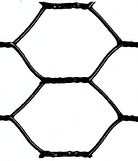
A 2-foot high chicken wire fence with 1" hexagonal mesh openings is recommended. Buy a 3-foot high roll and bend a 12" apron of the fence mesh to the outside of the garden. Bury it several inches deep to prevent digging.
Woodchucks                                                                                       
A 4-foot high fence with a 24" buried apron works well. They suggest leaving the top 18" of the fence unattached to posts. This will challenge the animals' climbing ability. You can also string an electrified wire along the top. Placing electric fencing a few inches outside the other fence is even more effective. To protect prized plants from these tunneling pests, bury a protective wire mesh basket two to three feet underground. 
Raccoons & Opossums 
You need fencing that provides an underground barrier and is difficult to climb. Use a 60" to 72" fence. Bury a 24" horizontal apron several inches underground on the outside of your garden. Leave the top 18" of the 36" or 48" high fence unattached. This will bend over as the animal climbs, preventing it from getting over the top. If you have difficulty finding 60" or 72" high fence, the apron and vertical parts can be two different rolls. Be sure to fasten the two edges together with hog rings or tie wire. For further security, electric fence wire can be run along the top. Spreading light weight netting on the ground around your garden may discourage these animals from approaching the fence.                                                                                                       
Coyotes 
An electric fence in combination with a strong 48" fence mesh, such as sheep and goat fence, works well. Place one electrified wire 8" off the ground, 6" to 18"away from the mesh fence. An additional wire strung along the top of the fence will discourage jumping.                                         
Bears 
They can be discouraged from entering an area by using electric fence. Bait, such as bacon strips or pork rind, should be attached to the wires. Bears will approach the bait, touch it with a wet nose or tongue and learn the characteristics of the fence. They will want to avoid it in the future. If the fence is not baited, a bear is likely to crash through the fence, paying no more attention to the shock than it would a bee sting. A 36" to 48" roll of chicken wire secured to the ground with ground staples can also be used as an effective barrier. Be sure to keep the area mowed.

Do the solutions the editors suggest sound good to you?

Do you have other suggestions to share based on your own experience?

deer fence

Fences are most effective when animals can't see what the fence protects - food. A solid fence will block their view of the delectable offerings from your garden. 
Polypropylene fences are less visible than solid fences. But they will not give protection from all animals.

  • Electric fences will not block your view of the garden. They can be more effective than solid fences, especially if the would-be poachers know the wires are hot. Animals are unlikely to test the fence more than once.                 
  • Be certain to check your local ordinances before installing a fence.
Read More

Topics: wire fence, garden fence, hex netting, deer fence

Wildlife Fencing Friendly To Migration - video

August 5, 2009 | by Duncan Page

Aiding Migration 

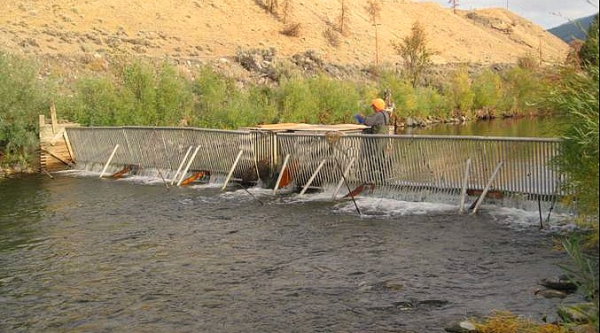
See what the state of Montana is doing with wildlife fence in the Monument Valley area to help elk, deer and antelope in their migrations.


Read More

Topics: deer fence

Duckbill Earth Anchors Hold Down Anything

August 3, 2009 | by Duncan Page

Strong, Safe, Cost-Effective 

Duckbill Earth Anchors are the easiest, safest and most cost-effective way to securely anchor anything! Each rustproof aluminum alloy anchor has a galvanized cable securely attached. The end above ground has a loop for easy attachment. When you need to securely fasten anything to the ground, use a Duckbill!

  • Easy to Installduckbill earth anchor
  1. Anchors are driven into the ground using a re-usable drive rod.
  2. The rod is removed once the anchor reaches the desired depth, usually when the length of the attached cable is in the ground. There is no need to dig a hole, saving you time and extra labor.
  3. Pulling on the conveniently looped end of the cable pivots the anchor into a locked position. The anchor pulls against duckbill earth anchorundisturbed soil, increasing the holding power.
  4. Anchor is ready to use.
  • Safe to Use
  1. Duckbill anchors leave no stakes, pipes or stems above ground level.
  2. The loop end will not injure people or damage equipment.
  • Versatile and Convenient

    duckbill earth anchor

  1. Anchors are also available without cables
  2. Available with pre-attached stainless steel cables.
  3. There are four sizes:
  • 40-DB1  -  20", 1/16" cable, 300 pound capacity  -  use drive rod DS-40
  • 68-DB1  -  2-1/2', 1/8" cable, 1,100 pound capacity  -  use drive rod DS-68
  • 88-DB1  -  3-1/2', 1/4" cable, 3,000 pound capacity  -  use drive rod DS-88
  • 131-DB1  -  5', 5/16" cable, 5,000 pound capacity  -  use powered driver


Sturdy Security: Theft Deterrence

Duckbill earth anchors can be used in many different ways, such as support, security and theft deterrent for:

  • equipment and motorcycles
  • lawn furniture
  • towers and structuresduckbill earth anchors
  • mobile homes
  • vineyards
  • trees
  • fences
  • airplanes
Can you think of other uses?


Three people sitting at a picnic table in park


 Duckbill Earth Anchors


Page copy protected against web site content infringement by Copyscape
Read More

Topics: duckbill earth anchor

How To Install Woven Top Netting Over Bird Pens

July 28, 2009 | by Duncan Page

2 Owls on Tree Branch  

Do you want to keep your birds or poultry safely contained inside the pen?

top netting

Careful Installation 

Have you purchased or are you considering purchasing a woven net to cover the top of your bird or poultry pen?

The potential for problems comes from the fact that any woven material is subject to distortion unless handled properly. Woven netting is lightweight and flexible and particularly subject to being pulled out of shape. Unless it is installed correctly, a 20' x 50' piece of netting will lose its ability to cover a 20' x 50' pen.

When the roll is opened it is longer than its stated length. As it is installed correctly, this length will shorten to its proper dimension.

Avoiding Problems

How do you install it? The following steps can help you avoid problems and do the job right.

  1. Stretch one end of the roll out to its full width.                                                                                                     
  2. Fasten one end of the top netting to one end of the pen.                                                                                   
  3. Starting from this fastened end, pull out only a few feet on each side.                                                               
  4. Secure the footage you have pulled out to each side of your pen. It is very important to attach the sides before stretching the next length. Do not over tighten the netting.                                                                     
  5. Pull out another few feet.                                                                                                                                     
  6. Fasten this footage to each side.                                                                                                                        
  7. Continue down each side of the pen a few feet at a time.                                                                                   
  8. Be sure to fasten both sides of what you have pulled out before moving on.                                                     
  9. This is crucial. Failure to do this can result in a distorted piece of netting that won't cover the entire pen. 
  10. When you reach the other end of your enclosure, attach the remaining end of the netting to the structure.

Attach Top Net to the pen sides using hog rings or safety ties for attaching to wire or staples for attaching to wood.

When properly installed, the stated size of the rolls will cover a pen of the same dimensions.

2 exotic birds


Top Netting for Gamebird Pens


Page copy protected against web site content infringement by Copyscape
Read More

Topics: top netting

Galvanized Or Vinyl Coated Welded Wire Fencing?

July 21, 2009 | by Frank Langone

deer behind fence

Possibilities to Explorevinyl coated welded wire mesh fence

If you have decided you want to use a vinyl coated welded wire mesh for your fence project because of its long lifetime and more attractive appearance, there are several options available to you.

Hoping for a Lightweight Fence?

Consider using 3" x 2" mesh, welded from 16 gauge wire. There are three different heights: 24", 36" and 48". Rolls are 50 feet long. 24" is available in green, 36" and 48" are available in both black and green.

Some of the uses for this light weight fencing: tack it to a wood post and rail fence; keep small dogs in your yard; keep larger animals out of your garden; protect trees and shrubs.

Heavier Weight, Smaller Mesh Fencingvinyl coated welded wire mesh fence

You have more choices: 1" x 1" mesh in 16 and 14 gauges; 1-1/2" x 1-1/2" mesh in 12-1/2 gauge; 2" x 2" and 1-1/2" x 4" in 14 gauge; 2" x 4" in 14, 12-1/2 and 11 gauges. All, except the 2" x 4" 12-1/2 gauge which is available in black only, are available in black and green. 14 gauge 2" x 4" rolls are 50" and 100' lengths.

  • Black has become the most popular color to use because it seems to disappear or blend in with the background very well.

These fence meshes can be used for pet containment, children's play areas, yard fence and the 1" x 1" and 1-1/2" x 4" meshes meet swimming pool fence code requirements.

hamster in cage


Read More

Topics: wire mesh, welded wire fence, black vinyl coated, 16 gauge

Request Your Quote Now. Get Fast Quotes.
Click here to shop our online store

Recent Posts

Subscribe to Email Updates