Serving USA & Canada | 978‑486‑3116 | Current pricing valid through October 1, 2024 due to ongoing tariff and vendor rate changes. Order now to lock in current rates before the next update.

Call our team at Louis Page: 978-486-3116 | Free Quote

The Fence Post

Living Snow Fencing - An Alternative To Wood & Plastic Snow Fence

November 16, 2009 | by Duncan Page

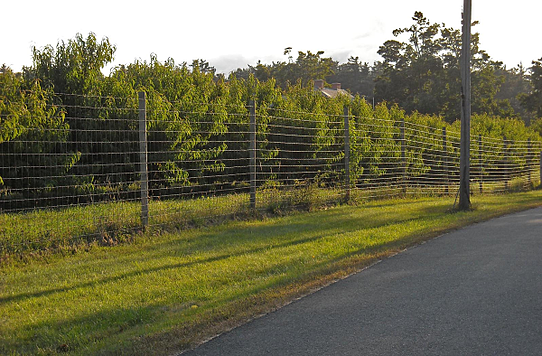
living snow fence  - summer     living snow fence  - winter      

Strong winter winds can cause dangerous driving conditions. Not only does blowing snow dramatically reduce visibility but also treacherous drifts can accumulate across roadways and other open unprotected areas.

A Natural Barrier

Several states have successful programs in place using living snow fence. The Iowa DOT has been developing and improving theirs for over 40 years. Living snow fencing is a natural barrier created by planting a combination of shrubs, trees and grasses that act as a windbreak. In Iowa, rows are five feet apart and shrubs are set three feet apart within the row. Plantings are arranged so that the gaps in one row are filled by the plants in the next row.  As the speed of the wind is disrupted and decreased, snow settles among and downwind from the plantings. Research shows that drifts will form downwind 10 to 12 times the height of the trees (100 to 120 feet downwind from a 10 tree). A concentrated and closely spaced placement of trees and shrubs results in shorter and deeper drifts.

When positioned properly, living snow fences can greatly reduce the amount of plowing needed to keep roads open for travel. Winter travel is safer.


Native Species with Reduced Erosion 

There are benefits in addition to safety when living snow fencing is used:

  • Highway beautification is enhanced with native species of plants.
  • Environmental stewardship is promoted.
  • Trees, shrubs and grasses are excellent wildlife habitat all year.
  • Living snow fences slow and reduce erosion.
  • When measured during winter months the temperature of the pavement surface in areas protected by living snow fence were higher than the surface temperature in unprotected areas.
  • In areas with severe cold, this greatly increases the effectiveness of chemicals used to prevent icing.
  • It is no longer necessary to install and remove wood or plastic snow fence.

If you live in an area that gets lots of snow, what type of snow fence does the DOT use?

Wood, plastic or natural living snow fence: which type of snow fencing would you prefer to see?

Interested in other types of living fence? Read our blog article Living Fencing.

- photos from NYSDOT

Read More

Topics: snow fence

How To Hang A Farm Gate - Video

November 12, 2009 | by Duncan Page


Keeping it simple! Instructions for installing a farm gate.


Read More

Topics: video, how to

A Fence That Floats?

November 10, 2009 | by Duncan Page

On the Land or on the Sea

New types of security fencing are currently being developed and evaluated. One type is called "floating" fence. There are two different "floating" fences - one for use on land and the other one on water. 

Floating Fence Used on Land

A 15-foot high fence stretches along a seven-mile section of the US-Mexico border in the Imperial County sand dunes between Calexico, California and Yuma, Arizona. This particular area is subject to drifting sand which causes changes in the topography.

Built at a cost of $40 million, the unique floating fencing is designed to be unfastened to anything below the sand's surface. When drifting sand starts to bury the fence line, sections can be lifted up by a machine and placed back on top of the sand allowing the 15-foot height to be maintained. New fencing does not have to be erected. Known as the "floating fortress" and "sand dragon", this new fence design is credited with reducing not only illegal immigrants but also drug smuggling.

See a picture of the floating fence

Floating Fence Used on Water

The other type of "floating" fence is being used by the US Navy as a way of protecting ships from terrorist attacks. Termed a "Waterfront Force Protection Barrier System", over 30 kilometers of floating fences have been successfully installed around Navy installations.

The floating fence, capable of stopping high-speed boats, is adapted from a fixed security barrier system. The fencing consists of independent 35 to 50-foot modules that are connected to each other. Pontoons support a steel structure. Vertical steel nets, usually 9 feet tall, are secured to this structure and sit on cylindrically shaped floats that form the actual fence. Variations in currents and tidal ranges up to 30 feet are accommodated. Gates are incorporated into the design as required.

Read the PDF about floating fences from Harbor Offshore Barriers, Inc.

Can you think of other situations where either of these fences could be of use? Do you think they're cost-effective?

Read More

Topics: fence, floating fence

A Fence as Art

November 2, 2009 | by Duncan Page


Running Fence by Christo and Jeanne-Claude

Running Fence

Christo and Jeanne-Claude   

A Passing Horizon

In April of 1976, after four years of planning and obtaining required permits and permission, construction began on an unusual fence. Completed on September 10, Christo and Jeanne-Claude's "Running Fence" was removed, leaving no traces, fourteen days later on September 23rd.

The 18 foot high fence was made with 2,222,222 square feet of heavy woven white nylon fabric. It wound for 24-1/2 miles through the rolling hills of Sonoma and Marin counties in northern California, terminating in the Pacific Ocean in Bodega Bay. The Running Fence crossed 14 roads and the town of Valley Ford. Openings were left for cars, people, cattle and wildlife. It was placed so that it could be viewed from 40 miles of public roads, as shown in this old super 8 movie.


Creating the Fence, Dismantling the Fence

350,000 hooks were used to attach the top and bottom edges of the heavy fabric to steel cables. The cables were secured to 2,050 - 3-1/2" x 21' tubular steel posts set 36" in the ground. Posts were not set in concrete. 90 miles of cable and 14,000 earth anchors were used to laterally brace the posts. Close to 400 people helped install the fence. After its removal, all material was given to the ranchers who had allowed it to pass through their property.

In addition to the materials used, all paid for by Christo and Jeanne-Claude, this monumental art project consisted of:

  • 18 public hearings
  • participation of local ranchers
  • 42 months of collaborative efforts
  • drafting a 450 page Environmental impact Report
  • three sessions of the Superior Courts of California
  • temporary use of hills, the Pacific Ocean and the sky

The project elicited strong reactions.


Do you think this is a work of art?

Read More

Topics: fence

Living Fencing

October 26, 2009 | by Duncan Page

living fence--hedge

The Aesthetic Edge

Living fencing can be an alternative to conventional wire, wood, vinyl and masonry fences. As noted in David Beaulieu's excellent article "Living Walls as Privacy Fences", living fencing has certain advantages:

  • lower cost
  • more attractive
  • fruit production
  • reduces traffic noise
  • seasonal foliage variation
  • provides a habitat for birds and small animals
  • sometimes less restricted by zoning regulations
  • can be pruned and sculpted into different shapes

Simplicity, Beauty, Style

Living fences make excellent privacy screens around your property. Planting a thicket of small trees or shrubs creates an effective barrier. Flowering bushes, deciduous and evergreen shrubs can be planted. The type of plants used will determine the height, width and appearance of the fence. How they are planted will determine the visual and physical tightness of the barrier. If necessary, a conventional fence can also be used to keep pets and children in the yard. A living fence can also be used around smaller areas in the yard such as patios.

An Efficient Windbreak

Living snow fences can also be a great alternative to plastic or wood snow fencing. The design will determine downwind snow distribution. A dense multiple row living snow fence will pile snow in a restricted area, reducing the need to plow highways and driveways. To make windbreak for the uniform distribution of snow across a field, a single row of tall deciduous trees can be spaced 15 to 20 feet apart. Snow will be distributed to a distance of 10 to 15 times the height of the trees.

Creating a Beautiful Hedge

A good hedge doesn't stop the wind but breaks up as it rushes across the land, sparing plants needing protection. A solid fence can sometimes create a pocket of air as it surmounts the top of the fence whereas a hedge distributes the flow of wind. Happily, the hedge creates a habitat for birds and enhances the environment. Be careful in your choice of plants for a hedge. For privacy and a consistent wind block, look for a hedge that doesn't drop its leaves in winter. Some research is required.

Here's a video about a boxwood hedge that may be of interest:


Learn more about living snow fences

Have you ever considered planting a living fence? Would living snow fencing be a solution that would work for you?


Read More

Topics: fence, snow fence, living fence

Request Your Quote Now. Get Fast Quotes.
Click here to shop our online store

Recent Posts

Subscribe to Email Updates