Serving USA & Canada | 978‑486‑3116 | Current pricing valid through October 1, 2024 due to ongoing tariff and vendor rate changes. Order now to lock in current rates before the next update.

Call our team at Louis Page: 978-486-3116 | Free Quote

The Fence Post

Duncan Page

Recent Posts

Turtle Fence - Galvanized After Welded Wire Mesh

October 19, 2010 | by Duncan Page

desert tortoise fence resized 600

A Power Plant Accommodates Turtles

Turtle Fence is being used to keep turtles out of construction areas.

The huge Ivanpah 440-megawatt solar power electric generating facility in south-eastern California is being surrounded by more than 39 miles of turtle fence. Why? Because before construction can begin on the site, all desert tortoises must be removed. And after completion, turtles will not be able to re-enter the site. The desert tortoise is a threatened species and considered vulnerable. They live their rather languorous lives in burrows anywhere from 3 to 10 inches deep, also in rock shelters or pallets. This is to minimize exposure to extreme temperatures, minimizing loss of water, and keeping their body temperature stable. Soil type is important to them for the purpose of den construction and nutrition, preferring alluvial fans, washes, and canyons. Appropriate burrow sites aid their population and their fidelity to their nesting grounds is strong. 

Galvanized Mesh

What has been selected as the best mesh to use for the purpose of assisting in this project? Locally sourced, US-made galvanized after weld, 16 gauge, 1" x 2" wire mesh that has been welded into 36" x 100' rolls. After the welding process, the mesh is drawn through a bath of molten zinc. The wires, including the welded areas, are covered with a thick corrosion-resistant coating. The welded wire turtle fence will last for years.

roll of wire

During installation, a portion of the fence is buried in the ground to discourage burrowing. The above-ground portion is tall enough to prevent the turtles from climbing over the fence. In this case, tortoises are being protected by being kept out of an area.

Here's some background on the situation:


Do you think this is a good solution?

signature

Duncan Page

Welded Wire Mesh


Read More

Topics: wire mesh, turtle fence, galvanized after

Top Four Reasons To Choose Vinyl Coated Welded or Woven Wire Fence

October 13, 2010 | by Duncan Page

Vinyl Coating  Questions and Answers

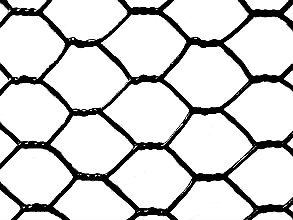
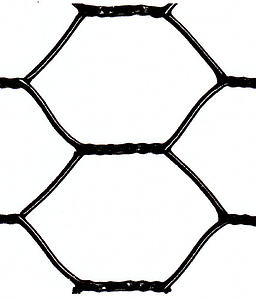
vinyl coated welded wire fence & mesh   black vinyl coated woven wire mesh

Q: What should you look for when you want to use a wire mesh to build a fence with superior qualities?

A: Vinyl-coated welded or woven wire mesh or fence.

Q: Why are these products superior?

A: Because they share the following four characteristics:

1. Vinyl-coated meshes are more durable.
  • The vinyl coating gives extra rust protection, sealing the galvanized wire underneath
  • Coated wire will last far longer than wire that is only galvanized
2. Vinyl-coated fences are more attractive.
  • Color masks the utilitarian and commercial appearance of plain galvanized mesh
  • A vinyl-coated wire fence will dress up your property
  • Black color is virtually invisible from a distance and will not detract from your view
3. Vinyl-coated wire is safer.
  • Vinyl cushions the wires
  • Areas that may have sharp edges, like the top and bottom of the fence, are protected and sealed
  • There is a lower risk of injury from contact with the fence--safer for animals
4. Vinyl-coated fencing is cost effective.
  • Using vinyl-coated welded or woven fence reduces the need for frequent replacement
  • The higher initial cost can be offset by the labor and material cost of more frequent repairs and replacement of galvanized material

Can you think of more reasons why or situations where it would be better to install a vinyl-coated fence instead of a galvanized fence?

Here's a look at the mesh in production: 


signature duncan page

Vinyl Coated Mesh


Read More

Topics: welded wire mesh, woven wire, vinyl coated wire, galvanized after

Post and Rail Fence Made From Recycled Plastic Bottles

September 23, 2010 | by Duncan Page

Waste Not Technologies/Close the Loop

Here's something different, practical, and timely! Plastic bottles are recycled and made into post and rail fence designed to replace wood sections. Watch the process in this video.


Watch this next video for more information about Waste Not Technologies and its manufacturing process.


Waste Not Technologies and Close the Loop are two companies that are doing their best to do something creative and practical when it comes to the problem of plastic waste in our landfills and oceans. 

Would you be willing to try using these products?

Read More

Topics: post and rail fence

Duckbill Earth Anchors: Protect Your Property During Storms

September 14, 2010 | by Duncan Page

Duckbill Earth Anchors

Strength and Stability

Q: How can you tie down and secure your property from wind and storm damage?

A: Use Duckbill Earth Anchors!

Holding Power that Amazes

  • Three sizes provide holding power from 300 to 5,000 pounds
  • Once installed, anchors pull against undisturbed soil
  • Anchors feature pre-attached high strength galvanized aircraft cable 

Quick Set-up

  • Easy to drive into the ground
  • No digging or trenching required
  • Save on labor during installation

Very Safe

  • Looped cable end above ground will not injure animals or people or damage equipment
  • Anchors have no stakes, pipes or stems above ground level
  • Drive rod is removed once anchor is in place

Streamlined

  • Drive into ground with reusable drive rod
  • Remove drive rod
  • Pull on looped end of cable until anchor pivots into lock position

Four Sizes

  • 40-DB1  -  20", 1/16" cable, 300 pound capacity  -  use drive rod DS-40
  • 68-DB1  -  2½', 1/8" cable, 1,100 pound capacity  -  use drive rod DS-68
  • 88-DB1  -  3½', 1/4" cable, 3,000 pound capacity  -  use drive rod DS-88
  • 138-DB1  -  5', 5/16" cable, 5,000 pound capacity  -  use power driver

Secure:Duckbill Earth Anchor installation

  • towers, sheds and other structures
  • scaffolding
  • airplanes
  • mobile homes
  • trees, shrubs and vineyards
  • turf
  • free-standing benches
  • anything that might blow away                                                                                                                                                          

And of course Duckbill Earth Anchors make an excellent theft deterrent.

                    Let us help you in making a selection--

signature


picture

Duckbill Earth Anchors

Read More

Topics: duckbill earth anchor

What is a Frog Fence?

September 7, 2010 | by Duncan Page

Brown Frog on Leaf

Protecting Our Web-footed Friends

Roadkill

  • In the Sandbar Wildlife Management Area on the northeast shore of Lake Champlain in Vermont, a frog fence is used to reduce roadkill of leopard frogs along a state highway
  • In the Klamath Basin in Oregon, a frog fence is used to protect Oregon spotted frogs from being decimated by the heavy tread of grazing cattle
  • In the backyards of America, frog fences are used to keep frogs out of swimming pools

Barriers

 - In Vermont, rolls of silt fence are put up along both sides of the highway for three months. Openings were left at 100-foot intervals in the 1,000 foot-long fence

 - In Oregon, a three-and-a-half-mile-long fence was erected as a cattle barrier

Around swimming pools, a wire fence made with 1/8" hardware cloth or a small mesh plastic fence high enough to prevent frogs from jumping over is effective.

Here's how one family attacked their toad problem (complete with musical accompaniment):


Have you ever seen a frog fence?

          Have you ever built a frog fence that was effective?  Care to share any tips?

                       Should state or federal money be allocated for frog fences?

signaturepicture                   Hardware Cloth

Read More

Topics: hardware cloth, frog fence

Request Your Quote Now. Get Fast Quotes.
Click here to shop our online store

Recent Posts

Subscribe to Email Updates