Serving USA & Canada | 978‑486‑3116 | Current pricing valid through October 1, 2024 due to ongoing tariff and vendor rate changes. Order now to lock in current rates before the next update.

Call our team at Louis Page: 978-486-3116 | Free Quote

The Fence Post

Duncan Page

Recent Posts

5 Unique Styles of Fence

November 14, 2018 | by Duncan Page

Wattle Fence        Lace Fence       Worm Fence        Living Snow Fence        Papercrete Fence  

1. Wattle Fence

Historic Fencing 

Wattle fences may be one of the oldest types of fencing still in use today. They were used in England long before medieval times. Traditionally the fences are built from straight, slender, flexible suckers or saplings of the willow tree up to 1-1/2" diameter. After the leaves are stripped, the ”withies” are woven between upright wood posts. Willow is an ideal wood because it is pliable and resists splintering. Other species, such as alder, can also be used.

Various Uses and Benefits

Wattle fences are very strong and long-lasting. Willow posts often take root in the ground creating a living fence, perfect for containing animals and enclosing gardens and orchards. And the density of the fence makes an ideal windbreak.
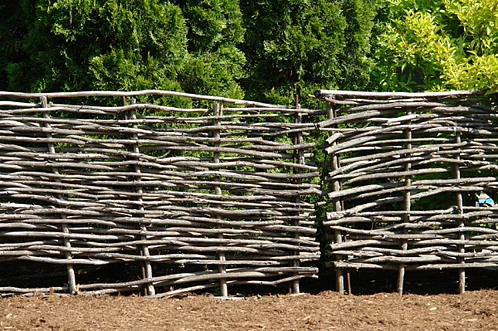
wattle fence

The rustic, handwoven appearance of a wattle fence adds an attractive defining touch to any yard, garden or landscape. Some possible uses:

  • arches
  • towers
  • trellises
  • plant supports
  • garden accents
  • hurdles or fence panels
  • attractive garden borders to line walkways

Wattle construction is a great way to use trimmings for fence building materials. Instead of burning or destroying branches, use them in a creative way to beautify and add interest to your landscaping. Even though willow is the ideal wood, any type of wood can be used.

2. Lace Fence

Change Up that Chain Link

Having grown up in a neighborhood where the lawns flowed into one another, when some new folks moved in and put up a stark chain link fence around the perimeter of their property, the neighbors were collectively horrified. Mercifully, they grew ivy on it. 

However, a new type of fencing has been introduced by the Demakersvan design studio in Holland. Called lace fence, it is a combination of chain link fabric and the art of lace making.
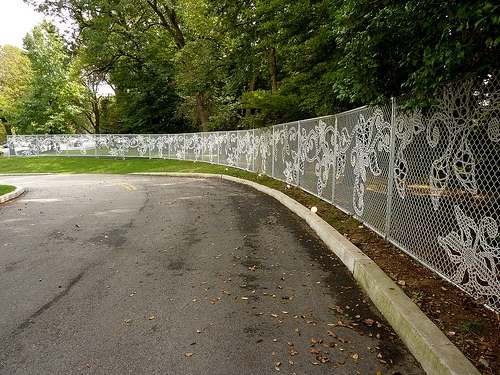
lace fence

The design possibilities - from floral themes to contemporary patterns and designs - are infinite. And you can submit your own designs. With this opportunity to customize each job, every lace fence is unique. Chain link fencing, a basic functional fence, can become a decorative and attractive work of art! Imagine coming up with a theme related to the property or space you are defining.

Many Possibilities

Lace Fence can be woven from both 11 and 12-1/2 gauge wires, either galvanized or vinyl coated. The wire mesh is securely clamped to a tubular frame. There are many different types of locations - both interior and exterior - where Lace Fence is currently in use, including but not limited to:

  • barrier fences in parks and other public areas
  • interior partitions in banks, restaurants, hotels and gyms
  • railing safety mesh on stairways, decks and balconies
  • decorative panels on the facades of commercial buildings
  • safety fences on apartment buildings
  • museum displays

Photograph of Lace Fence at The Design Center at Philadelphia University is used by permission. See this blog article to see more pictures of this unique fencing. 

3. Worm Fence  

The Definition

A fence, zigzag in plan, made of rails resting across one another at an angle - according to the Random House Dictionary.

This style of fencing is also known as Snake Fence, ZigZag Fence and Battlefield Fence - the latter term due to its presence on many Civil War battlefields (see video below). Worm Fence (also known as Virginia Worm fence) has been used in America since the 1600s. Easy to build, split wood rails are stacked on each other to create the fence. The ends of the rails alternate, creating the openings. For stability of the stacked rails, each section of fence is angled from the previous one, giving the appearance of a worm or snake.
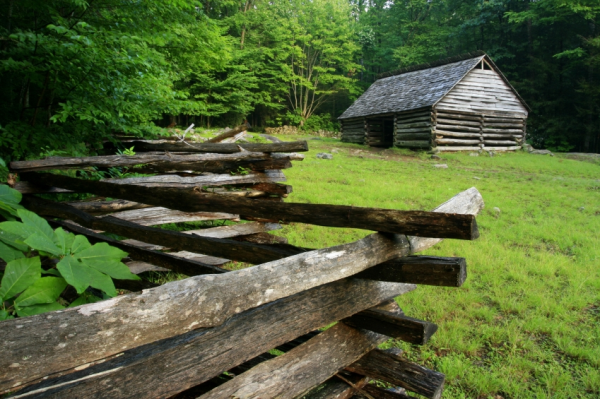
worm fence at Gettysburg

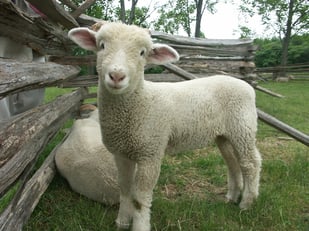
sheep may safely graze

No Post Holes; Adapts to Uneven Terrain 

No vertical posts are required to build the fence. This both eliminates the need to dig post holes and makes the fence easy to install - a particular advantage in rocky terrain. Sometimes a pair of crossed posts would be used at the junction point of each section. This would allow the fence to be closer to a straight line. With a plentiful supply of wood and ease of construction, it is easy to understand why worm fence was the most common type of fence used in America by the late 1800s. It is gaining popularity today for use as a rustic fence that will add to the appearance of a piece of property and it is used in many outdoor historical museums.

Here's a quick overview of colonial fence styles:


4. Living Snow Fence 

Strong winter winds can cause dangerous driving conditions. Not only does blowing snow dramatically reduce visibility but also treacherous drifts can accumulate across roadways and other open unprotected areas.

A Natural Windbreak

Several states have successful programs in place using living snow fence. The Iowa DOT has been developing and improving theirs for over 40 years. Living snow fencing is a natural barrier created by planting a combination of shrubs, trees, and grasses that act as a windbreak. In Iowa, rows are five feet apart and shrubs are set three feet apart within the row. Plantings are arranged so that the gaps in one row are filled by the plants in the next row.  As the speed of the wind is disrupted and decreased, snow settles among and downwind from the plantings. Research shows that drifts will form downwind 10 to 12 times the height of the trees (100 to 120 feet downwind from a 10 tree). A concentrated and closely spaced placement of trees and shrubs results in shorter and deeper drifts. 

When positioned properly, living snow fences can greatly reduce the amount of plowing needed to keep roads open for travel. Winter travel is safer.
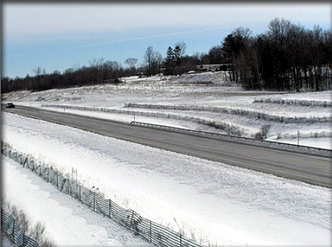
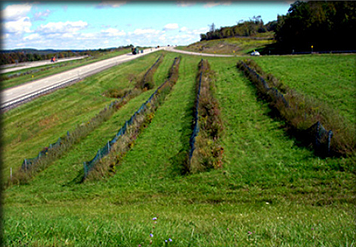
living snow fence  in winterliving snow fence summe

Aesthetic and Environmental Advantages

There are benefits in addition to safety when living snow fencing is used:

  • Highway beautification is enhanced with native species of plants
  • Environmental stewardship is promoted
  • Trees, shrubs and grasses are excellent wildlife habitat all year
  • Living snow fences slow and reduce erosion
  • When measured during winter months the temperature of the pavement surface in areas protected by living snow fence were higher than the surface temperature in unprotected areas; in areas with severe cold, this greatly increases the effectiveness of chemicals used to prevent icing
  • It is no longer necessary to install and remove wood or plastic snow fence 

5. Papercrete Fence

Very Alternative

Ever heard of a fence made out of papercrete? What exactly is papercrete? This video will show you how to make a 4' by 8' section of fencing - real DIY stuff, folks. A recipe follows--

Papercrete Ingredients--

  • 30 pounds of concrete
  • 18 pounds of joint compound
  • 1 pound of boric acid
  • 90 pounds of newspapers
  • Just add water and you're good to go!

But...would you really want a papercrete fence around your house?
Read More

Topics: lace fence, worm fence, living fence, Wire Coating, vinyl coated

Gopher Problem? Try This!

September 23, 2014 | by Duncan Page

gopher

Prevent a Takeover

Gophers are highly destructive animals. They live in burrows and like to eat many of the plants that people have in their gardens and yards. If a family of gophers takes up residence in your yard, you could quickly find your lawn taken over by gopher mounds and tunnels. It is easy enough to kill or capture gophers once they arrive, but it would be greatly preferable to keep them out in the first place.

gopher holes

Holes and Hazards

Gophers can cause a number of problems. The aesthetic damage to your landscaping is just the beginning. Gophers also eat garden plants like carrots, lettuce, and radishes. Gophers also carry dangerous diseases like rabies. They have sharp teeth, and like any other animal, they can be dangerous when they feel threatened. Worst of all, gophers make holes in your yard; these holes are a trip hazard for children, elderly individuals or well, anybody. Before you know it, a child could have a sprained ankle. An older person could end up with a broken ankle, wrist or hip. There are several solutions to gopher problems to choose from, depending on your needs, preferences, and budget.

Planting Strategy

Gophers have a rather adventurous palate, but there are some plants that they do not really care for. If you plant these species at the perimeter of your property, you could make your yard a less attractive area to gophers. For example, alliums, from the onion family are very pungent and are repellent to gophers. Some varieties of alliums are also very beautiful; however, remember these plants must surround what you want to protect. Consult the plant experts at your local nursery for advice on choosing other gopher-repelling plants.

Set a Trap

There are many reasons that trapping gophers may be preferable to killing them outright. Gopher traps allow you to rid your yard of gophers easily and humanely.

Poison: Maybe...maybe not

Poison is quite effective at killing gophers, but there are serious concerns surrounding its use. The poisons that are effective against gophers could also be harmful to children, pets or livestock. If you can be certain that none of these will be in danger of ingesting the poison, it may still be a good solution, provided you have some way to dispose of the dead gophers.

Fencing Them Out 

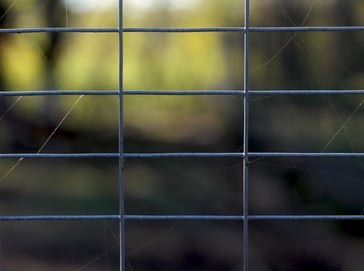
Fencing is a very effective tool for keeping gophers out of your yard.  What kind of wire mesh do you need? To keep the gophers out, choose wire mesh fencing with no more than ½-inch openings. Gophers are burrowing animals, so the fence should extend at least 18 inches below the surface. Because it will be highly susceptible to corrosion, choose galvanized steel or vinyl coated fence wire. If your yard is already populated by gophers, you will need to use one of the other methods to get rid of the gophers once you install the fence; otherwise, you could end up with a gopher sanctuary.

Protect and Defend

No matter what solution you choose, keeping gophers out will make your property a safer place that is better looking or more productive. It takes a lot of time and energy to maintain a healthy yard; don't let gophers ruin your hard work. Choose the solution that works for you and get rid of these uninvited guests before they ruin the party.

Hardware Cloth

gopher_2


Read More

Topics: gopher fence, vinyl coated wire, galvanized, 1/2" mesh

Keep Bambi Out this Season

September 18, 2014 | by Duncan Page


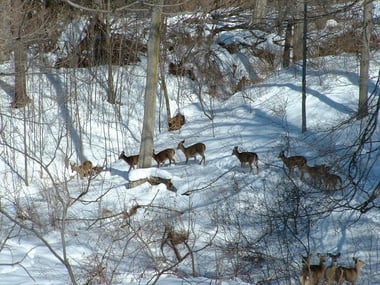
deer in the snow
Your Silent Neighbors

Deer are among the most adaptable animals on earth. More than 90 different species of deer have found homes all over the earth, in nearly every habitat imaginable, from dense forests and mountainous terrain to marshes and deserts.  Though types of deer may be found in a variety of environments, deer typically inhabit the border zones that mark the transition from forests to meadows, where there are soft grass and other plants for them to eat and adequate cover for them to safely spend the night, relatively protected from predators.

With Keen Senses 

With their keen sense of smell and hearing, they can react to danger speedily. Their eyes set at the sides of the head means efficient scanning all-around. Their long legs are highly-muscled, able to carry them at speeds up to 30 miles per hour. Their hooves at the front can be long and sharp and are used for defense; males also use antlers to fight off predators. To sound the alert, they stomp their hooves, and white-tailed deer raise their tales so the white spot behind enables the herd to follow more readily. Additionally, they can jump and swim when they are at threat. 

Adapting

Undeniably, there is another creature that likes to live in nearly every type of habitat, all around the world. That creature is the human being. Deer have little aversion to living close to humans. In fact, since they are so adaptable, most deer are quite willing to help themselves to landscape and garden plants provided by humans. This is quite convenient for the deer, but much less desirable for the people who find their nice-looking yards destroyed by deer. People who have never witnessed it have difficulty understanding just how destructive and thorough a herd of deer can be.

Herd Of Deer In Green Grass Field

Fencing is Best

If you'd like to avoid having deer in your yard, perhaps you could just design your yard to make it unattractive to them. The two biggest problems with this approach are that humans tend to enjoy the same types of landscaping that deer enjoy and deer will eat almost anything. If you choose to live in an area that is inhabited by deer and you want to keep your garden or yard safe, you will need to keep the deer out. You can protect a garden with fencing, which is the only really effective way to keep deer out.

And What Type of Fence?

There are many different styles of deer fence available. When you want to protect a garden with fencing, you will need to consider three characteristics of your new fence.

  • Materials

The two most common materials used in protective fencing are metal and plastic. Metal fencing tends to be more durable than plastic but is also more expensive. If you want to get the maximum life from your fence, consider using galvanized steel or welded mesh that has been coated in PVC. This has the added benefit of blending into your yard, making the fence less of an eyesore, particularly when using a black PVC coating.

  • Height

To protect your yard from deer, a six-foot fence is an absolute minimum, although an eight-foot fence is an ideal choice. An eight-foot fence may cost a little more, but it is better to install the right fence from the start than to have to rebuild your inadequate fence a few seasons later.

  • Appearance

This is the final characteristic to consider; it is also the point where you will have the most options. Deer fencing is available in an enormous variety of styles and colors, for everything from an austere, industrial look to an aesthetically pleasing look that blends in with the environment.

The deer in your area would like nothing better to sustain themselves on your landscape or garden. Do not let them; you can efficiently protect a garden with fencing, and keep the deer where they belong.
 
deer
 
 
Deer Fence
 
Read More

Topics: deer fence, galvanized after, black vinyl coated, deer and orchard fence

Wire 101: What is a Wire Gauge, Anyway?

September 16, 2014 | by Duncan Page

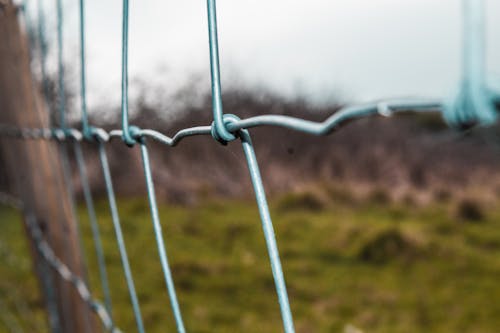
Selective Focus Photography of Gray Chain Link Fence

Wire Gauge Basics

Gauge is a measurement of wire thickness.  Wire gauge information is confusing to many people because it does not work like most of the measurement systems that non-technical people are familiar with.  For one thing, each works in reverse; as the numbers get larger, the wire gets thinner.  Another source of confusion is the fact that wire gauges do not correspond to convenient actual measurements.  To truly understand wire gauge, you must know something about the way that wire is manufactured.

Manufacturing Wire

To make wire, manufacturers start with a rod of metal; for fencing, steel is the most common choice.  This rod of metal is pulled through a metal plate with a hole in it.  This metal plate is called a die, and the process of pulling the metal through the die is known as drawing.  This process is repeated again and again with progressively smaller dies until the desired wire size is reached.  Originally, the gauge of the wire referred to the number of times that the drawing process was done.  Wire manufacturers started with Gauge 0 metal rods and repeated the drawing process as many times as necessary.  In earlier times, the size of the dies and the wires produced through them could vary significantly from one shop to another, because of low-tech machining processes.  As machining and manufacturing became more precise, this variance began to become a problem. This eventually led to the standardization of wire gauge information; from that point on, each gauge measurement has corresponded to a particular size of wire.

Sizing

In the United States and Canada, the typical standard for wire gauge is called the American Wire Gauge.  In this system, the diameter of wire of a particular gauge is determined by a mathematical formula.  Using this formula, manufacturers are free to develop wire of any arbitrary gauge, including half or other fractional gauges.  Here is a list of common wire gauges that are used in fencing and their corresponding measurements:

  •  8.5 gauge - 0.155 inch
  •  9 gauge - 0.1483 inch
  • 10.5 gauge - 0.128 inch
  • 11 gauge - 0.1205 inch
  • 12.5 gauge - 0.099 inch
  • 14 gauge - 0.080 inch
  • 16 gauge - 0.0625 inch
  • 18 gauge - 0.0475 inch
  • 20 gauge - 0.0348 inch
  • 21 gauge - 0.0317 inch
  • 23 gauge - 0.0258 inch
  • 27 gauge - 0.0173 inch

Different gauges of wire and different materials have different properties for flexibility, durability, and electrical conductivity, any or all of which may impact their usefulness as fencing material.  Your specific needs will determine what gauge of wire is best for your fence.

Reputable Vendors

In many cases, the choice of wire gauge will be made for you when you choose a particular style and type of fence. It is good to understand wire gauge information, but it is best not to get too caught up in it.  Rather than looking for a fence made of a particular gauge of wire, check out fences in person whenever possible, and choose a fence that feels sturdy.  When this is impossible, be sure to deal with an experienced, reputable vendor that can offer you more than just a number. If you call Louis Page, you will find ready help in discerning what gauge and style of fence is appropriate to your project. (866) 328-5018

VW Beetle wire sculpture
Shop Online Now
 
Read More

Topics: wire mesh, wire gauges

What to Look for When Shopping for a Quality Welded Wire Fence

August 8, 2014 | by Duncan Page

AdobeStock_186966406
 
Design, Materials, Construction
 

When you're thinking about fencing, you have many choices. You have a variety of materials, designs, and types of construction to consider. If you have decided to use metal fencing for your yard, farm or other property, there are several styles available. There are two main classifications of metal fencing, decorative and purely functional. Decorative fencing, usually made of aluminum or wrought iron, looks good and is functional as well. It is a good choice for yards, but it is expensive, and not commonly used to enclose large areas. When cost is a primary concern, wire-fencing styles such as chain-link, barbed wire or welded wire are better choices.

Welded wire fencing is similar in design to a chain-link fence, but, as the name implies, the wires making up the fence are welded together, making the fence stronger. If you want to install welded wire fencing on your property, there are several things to look for in a quality welded wire fence.

  • Manufacturer

First, look for fencing made by a good manufacturer. A history of making quality products and a reputation for good customer service are the indicators of the best manufacturers. Look for these characteristics when you are shopping for welded wire fencing.

  • Country of Origin

Building wire fencing is not too complex. Wires are assembled on a jig and welded together, often by machines. Because there is little labor involved, there is little advantage in choosing fencing manufactured overseas, where labor costs are lower. The price of shipping increases costs; to keep prices competitive, many overseas fencing companies must cut corners on materials. Choosing fence products made closer to home makes it more likely that you will end up with a quality product that will last for many years.

  • Wire Gauge

Gauge is a measurement of the diameter of a piece of wire. Originally, gauge referred to the number of drawing steps required to manufacture wire of a specific diameter; now, wire gauges are standardized to correspond to specific sizes.  Lower numbers are thicker. Wire fencing is typically made from 12 to 16 gauge wire, with a diameter of 0.08 to 0.05 inches.

  • Wire Finish

Steel is a common metal used in making welded wire fencing, but it is susceptible to corrosion. To combat this, most welded wire fencing has some kind of protective finish. This finish could be paint, plastic, or zinc. Steel protected by a thin layer of zinc is called galvanized steel. Galvanization can be done before or after welding. Galvanizing before welding offers some protection, but galvanizing after welding gives steel a thicker, stronger zinc coat that is extremely durable and can withstand many years of harsh elements. A vinyl coating is also an option. Vinyl is often combined with galvanization, giving the fence the best of both protection and looks.

Welded wire fencing is a cost-effective material that is just as functional as chain-link fencing, but will not give your property quite the same industrial look. When you are shopping for welded wire fencing, look for the attributes discussed here to ensure that you purchase a high-quality product that will give you many years of service.
 
 Welded Wire
 
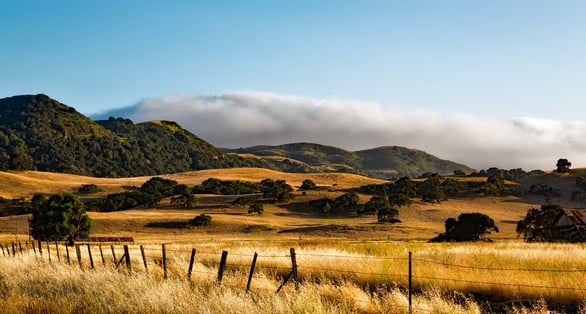
landscsape with hills and golden fields
 
Read More

Topics: welded wire fence, galvanized after, fence choices

Request Your Quote Now. Get Fast Quotes.
Click here to shop our online store

Recent Posts

Subscribe to Email Updates