Serving USA & Canada | 978‑486‑3116 | Current pricing valid through October 1, 2024 due to ongoing tariff and vendor rate changes. Order now to lock in current rates before the next update.

Call our team at Louis Page: 978-486-3116 | Free Quote

The Fence Post

Snow Fence & Sand Fence - Why They Work

March 10, 2009 | by Frank Langone

Kalinich_snowfence1-1

Sand Fence


Safety on the Roads 

A snow fence is a very desirable barrier for road and highway maintenance as blowing snow reduces visibility for drivers, blinding them and causing accidents through lack of vehicle control. Blowing snow also complicates the upkeep of roads. Unmanaged snowdrifts reduce visibility at intersections and curved roadways, increase the buildup of ice, bury signs, and reduce the effectiveness of guard rails and safety barriers.


Snow and Sand Fences - their effect 

snow fence

Blowing snow particles are similar to tiny grains of sand. Those particles too heavy to be suspended in the air move by bouncing or intermittently jumping along the surface of the ground. The heaviest particles roll or creep along the surface, collecting into drifts or dunes. Snow and sand fences restrain the wind, acting as windbreaks and slowing its speed. This forces more of the suspended particles to fall to the ground and the creeping particles to come to rest. Some particles are also deposited on the upwind side of the fence. This drift is normally 15% of the amount captured on the downwind side.

   sand fence

Protecting the Coast

As sand dunes are a major buffer between sea and land, maintaining the dunes is a key to preventing coastal erosion. Not only do properly placed sand fences preserve dunes, but they can also divert foot traffic away from helpful dune-preserving plants such as cape beachgrass.

Drift or Dune Growth - the stages

Stage 1 - A lens-shaped drift forms as creeping particles are caught by the fence. The wind force diminishes for a distance equal to about 15 times the height of the fence. As the blowing snow or sand falls to the ground, the drift becomes deeper until the wind no longer follows its curvature.
Stage 2 - An eddy or recirculation zone forms at the downwind end of the drift or dune. The mass of the drift itself adds increasingly significant wind resistance which may improve the efficiency of the fence. A recirculation zone at the tail of the drift traps particles that blow off the top. The drift becomes deeper but not much longer.
Stage 3 - As the drift approaches its maximum depth (for 50% porous fences, 1 to 1.2 times the height of the fence) the recirculation zone at the tail end fills in as the drift lengthens downwind. This trapping efficiency declines as the recirculation zone diminish in size.
Stage 4 - When the downwind end of drift or dune begins to assume a smooth profile, the recirculation zone begins to disappear. Subsequent growth is slow as the drift approaches its maximum length.

Wooden or Plastic Snow or Sand Fence

Beach Preservation Fencing

sand fence

Read our blog article "How To Install Snow & Sand Fence - Guidelines."

Information was taken, in part, from the Strategic Highway Research Program by The National Research Council. 

Read More

Topics: snow fence, sand fence

Will a Tall Fence Keep My Dog in My Yard? - Video

March 5, 2009 | by Duncan Page

Some Very Serious Skills Here

How high should you build a fence to keep your dog from escaping? It depends on the fence ... and the dog! Some dogs are just smart, steely, and determined. Can any tall wire fence contain them?


Read More

Topics: video, dog climbing fence

Welded Wire Mesh Meets Railing & Handrail Safety Requirements

March 3, 2009 | by Duncan Page

Be Sure to Check Building Codes

Stairways, decks and raised platforms are a potential risk forwelded wire safety railing mesh injury. At special risk are young children. There are strict building code requirements that address these issues - universal standards based on the physical properties of commonly used deck building materials. You should always refer to local building codes that apply to your area. These may vary somewhat, due to climate conditions and materials used.

Every railing, handrail or guardrail has specific opening limitations that are applied to any opening within the system. In general, any openings - such as those between spindles, balusters, intermediate rails, or ornamental enclosures - cannot allow the passage of a sphere 4 inches or more in diameter.

Mesh that will do the job--

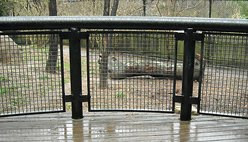
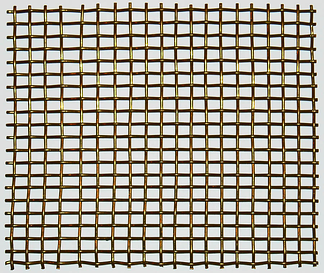
There are welded wire meshes available that provide solutions for meeting the code requirements of railing safety. The meshes can be attached directly to the railing structure or made into insert panels that are mounted within the system. There are products available in a variety of mesh sizes and wire gauges.welded wire railing safety mesh

  • Galvanized After Weld (GAW) meshes:
      • extra heavy coating of zinc
      • provides extra protection from rust and corrosion
                                                                     
  • Vinyl coated meshes:
                                                                                                              
    • PVC is tightly bonded to the wire
    • pliable - will not crack when bent
    • tough UV treated finish resists scrapes
    • smooth, attractive finish - black or green
                                                                    
  • Stainless steel meshes:
                                                                                                                    
    • extremely durable and attractive
    • resists rust and corrosion
                                                                                                                
      Louis Page fence panel and picnic table
  • Wire gauge sizes available:                                                                                                                       
    • 4
    • 6
    • 8½                                                        
    • 10½
    • 12½
    • 14                                                                                                                  
  • Meshes available:                                                                                                                               
    • 4" x 4"
    • 3 "x 3"
    • 2" x 2"
    • 1½" x 1½"
Read More

Topics: safety mesh, panels, railing

How To Install Wood Fence Posts For Woven Wire Fence - Video

February 25, 2009 | by Frank Langone

Posts, Braces, and Tensioning

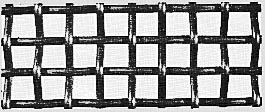
These videos show you how you can install a woven wire farm fence with wood fence posts using a hydraulic post driver. Typical applications are horse fence, field fence, garden fence, sheep and goat fence, deer fence - any fencing that needs strong wood posts. 


Woven Wire

Read More

Topics: woven wire, posts

A Strong H Brace for Your Woven Wire Fence - Video

February 25, 2009 | by Duncan Page

A Thorough and Trusty Guide

This video will show you how to build bracing strong enough to ensure that your fence will last a long time. Watch the clearly shown step-by-step procedures for building an "H" brace assembly.

 
You might also enjoy this "How To Install Field Fence" video. 
 
 
Shop online at https://shop.louispage.com/
Read More

Topics: woven wire, posts

Request Your Quote Now. Get Fast Quotes.
Click here to shop our online store

Recent Posts

Subscribe to Email Updates