Serving USA & Canada | 978‑486‑3116 | Current pricing valid through October 1, 2024 due to ongoing tariff and vendor rate changes. Order now to lock in current rates before the next update.

Call our team at Louis Page: 978-486-3116 | Free Quote

The Fence Post

Duncan Page

Recent Posts

High Tensile Fence vs. Low Carbon Fence - What's The Difference?

April 1, 2010 | by Duncan Page

high tensile deer fence

The Advantages of High Tensile Wire

  • Are you thinking about using field fence to enclose your animals and property?
  • Agricultural fencing is available in two types of wires: low carbon and high tensile. What's the difference?
  • Is there an advantage to using one over the other?

Low Carbon Wire - easy to work with, but...

For years, traditional field and farm fence have been made using low carbon wire. Low carbon wire used in fencing is usually made from steel rod with a carbon content of approximately 0.10%. It is easy to work with but is prone to stretching and sagging. It requires regular maintenance and is weaker than high tensile wire.

High Tensile Wire - inherently Stronger

This wire has become very popular due to its advantages. It is made from steel rod with a carbon content of approximately 0.28%. Higher carbon content makes high tensile wire stronger. Its higher psi rating gives it a higher breaking strength. To get the same strength, you can use a lighter gauge high tensile wire in place of a heavier low carbon wire. You can complete your project at a lower cost.

  • Lighter weight also means easier handling and installation. Fewer posts are required so you can increase the spacing between posts. If installed properly, high tensile fences require little maintenance. Re-tensioning is not necessary.
  • During installation high tensile fencing requires less tension to make it tight. The wire is stiffer and will not stretch and sag. This characteristic gives it flexibility - it will give and bounce back when animals lean against it.

This video shows quite dramatically the differences between these two types of wire:

 
Install a high tensile fence and you will have a longer-lasting, lower maintenance fence for less cost than a conventional low carbon fence. Which would you choose?
 

duncan page     Duncan Page

 
Woven Wire
Read More

Topics: woven wire, field fence, high tensile wire, farm fence

Woven Top Netting Used In Zoo Displays

March 26, 2010 | by Duncan Page

Top Netting used at the Birmingham Zoo 

flight pen top netting Birmingham zoo

Notice how this netting is attached to a 12.5 gauge woven 2" x 4" mesh fence

You have a collection of valuable birds you want to contain within a certain area. You want the birds to be safe from predatory birds from above. You want to cover a large area. You want a high ceiling or open roof. Installation needs to be as easy, safe, and as fast as possible. The material you use must be soft and flexible, enough so that the birds will not hurt themselves when they come in contact with the netting while they are in flight.

What can satisfy all these requirements?

Flight Pen Top Netting - long life and easy to use

White Netting

Used by zoos, commercial game bird farms, animal rehabilitation, and backyard hobbyists. The multiple strands of woven black polypropylene provide protection for your birds. Here's a list of the benefits:

      • Rolls are lightweight and easy to handle
      • Support structure can be less robust, less expensive
      • Large size rolls make it easier to cover large areas
      • No need to make a patchwork of smaller rolls
      • Flexibility makes top net softer - less chance of injuring yourself and your birds
      • Available in a wide variety of roll sizes, weight, and mesh sizes
      • UV resistant for long life
      • Top net will not rust
      • Mesh is resistant to mildew and rot

Do you have any birds that need safety and protection?

signature   Duncan Page

Top Netting for Flight Pens


Read More

Topics: top netting, woven wire, zoo, 12.5 gauge

Wrap Your Pallets Of Stones With Wire Mesh For Safety

March 12, 2010 | by Duncan Page


stone pallet wrapped with woven wire mesh 

So That They Shift No More! 

Carting rocks around from one place to another can be a risky business. And yet, you need to get them from the source to the dealer and then ultimately to the job site.

Rocks Controlled

You pile them on a pallet, but how do you keep them from rolling around? How do you make sure they don't roll off the truck and smash onto a passing vehicle? How do you safely restrain them?

Secure Rocks Using Wire Mesh

Have peace of mind as you roll along. Be free from worry, knowing that your stones are securely wrapped in wire mesh. They will reach their destination without incident.

Wrapping Stone Pallets--Options

      • Woven wire mesh - 20 gauge, 18 gauge, 16 gauge, 12½ gauge
          • 1", 1½", 2" hexagonal mesh
          • 2" x 2", 2" x 4" "square" mesh
          • galvanized before, galvanized after and vinyl coated finish
      • Welded wire mesh - 16 gauge, 14 gauge, 12½ gauge, 11 gauge, 10½ gauge
          • mesh sizes: ½" x ½", ½" x 1", ½" x 2", ½" x 3", 1" x 1"
          • mesh sizes: 1" x 2", 1½" x 1½", 2" x 2", 3" x 2", 1½" x 4", 2" x 4"
          • galvanized before, galvanized after and vinyl coated finish
How safe do you want to be?
 
Red Dump Truck Near Filed Rocks Under Cloudy Sky
 
Welded Wire Mesh


Read More

Topics: wire mesh, welded wire mesh, pallet wraps, woven wire mesh

Woven Wire Fence & Mesh Used By Zoos

March 9, 2010 | by Duncan Page

Secure Animals: Containment and Exclusion

There are many different styles of woven wire fence that can be successfully used in zoo displays. These wire fencing products can also be put to use around the home, farm, and public areas such as parks and recreational areas. Think of these fences when you have any situation where animals need to be contained or excluded.

double wattled cassowary & 2

Double Wattled Cassowary & 2" x 4" woven wire mesh - Birmingham Zoo

 12.5 gauge, 2" x 4" mesh

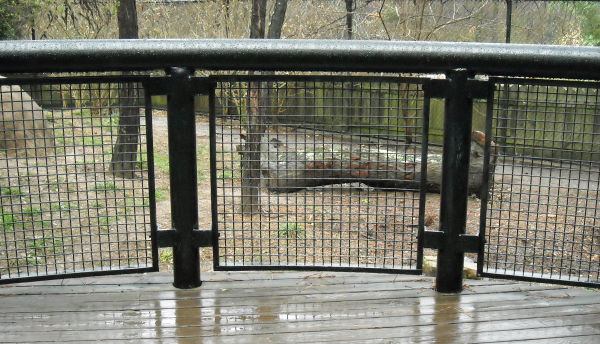
Woven 2" x 4" mesh is made with heavier 10 gauge selvage wires running along the top and bottom edge of the fence. This gives the fencing greater strength. Strong 12.5 gauge wire makes up the balance. A third piece of 12.5 gauge wire forms a smooth stiff knot around the horizontal and one-piece vertical wires securely holding them together. Knotted construction gives the fence some flexibility, making it easier to install on uneven ground. Woven 2" x 4" mesh is available in three different finishes: Class 1 galvanized, Class 3 galvanized, and Class 3 black. It can be used effectively with very large birds, other animals such as dogs, horses, zebras, and any other animal that requires a strong fence. 

woven 2

Woven 2" x 2" wire mesh fence on sides of display - Franklin Park Zoo

16 gauge, 2" x 2" mesh

Made with the same knotted construction as the 2" x 4' fencing, this lighter-weight woven wire fence is made using 14 gauge wires on top and bottom and 16 gauge wires for the filler. As with its heavier brother, the fencing has inherent flexibility. 2" x 2" mesh can be used with birds and other small animals - situations where a lighter fence will be effective.

two deer behind fence with children looking

 deer & wildlife fence  - ostrich display


Deer and Wildlife Fence

Woven Deer and Wildlife Fence - Franklin Park Zoo


Woven from 12.5 gauge high tensile wire, this strong heavily galvanized fencing can be used with many different kinds of animals. All feature spacing between horizontal wires that graduate from small at the bottom to large at the top. Heights range from 4' through 10'. Horizontal and vertical wires are held together with fixed knot construction. Deer and wildlife fencing is available with a Class 3 galvanized finish. Some heights have a Class 3 black finish. The strength and height make this an ideal fence to use with a wide range of animals.

deer fence gates

Deer fence gateway - Birmingham Zoo

Alligator behind wire mesh

 Do you have any unusual animals that you want to keep in - or out? Check out our Emu blog.

Deer and Wildlife Fence


Read More

Topics: woven wire, high tensile wire, zoo, deer and wildlife fence

How To Build A Barbed Wire Fence Gate - Video

March 3, 2010 | by Duncan Page

Required: a Good Pair of Gloves

Watch this video from the University of Wyoming Cooperative Extension Service and learn how to build a fence gate using barbed wire.

Shop Online Now

Read More

Topics: barbed wire, how to

Request Your Quote Now. Get Fast Quotes.
Click here to shop our online store

Recent Posts

Subscribe to Email Updates