Serving USA & Canada | 978‑486‑3116 | Current pricing valid through October 1, 2024 due to ongoing tariff and vendor rate changes. Order now to lock in current rates before the next update.

Call our team at Louis Page: 978-486-3116 | Free Quote

The Fence Post

Your Fence Plans and the Season Ahead

January 31, 2011 | by Frank Langone


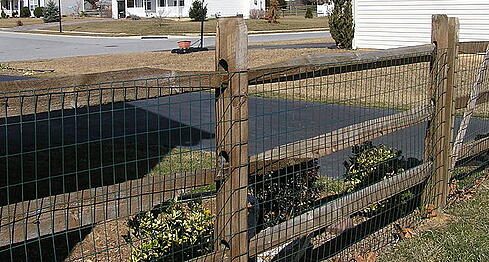
snowy road with wooden fence


Being Prepared


Time to make plans. Colder months are a great time to look through gardening, landscaping, and seed catalogs. Visualize what you would like to do in the yard and garden this spring. Whether you're in an area where your yard is just dormant or snow actually covers the ground, you can begin to draw up plans and designs on the inside where it's warm and comfortable.


Do you:

  • need to install a new fence? 
  • want to improve your landscaping?
  • want better results from your garden?
  • need to consider replacing your fence?
  • need to repair winter damage to your fence?

Now If a fence is on your to-do list, there are many possibilities and options open to you. Start by considering what you want to accomplish and what the end product should look like. For example:

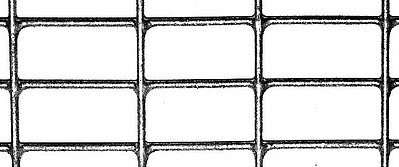
Welded or Woven Wire Mesh - Galvanized or Vinyl-Coated

  • Use a smaller mesh, especially at the bottom of the fence, to keep smaller animals from getting into your garden
  • Bury 12" or more of the fence underground to discourage burrowing
  • Bend 12" or more of the fence to the outside of your garden laying it on top of the ground for an effective protecting apron

A vinyl-coated wire fence is a smart choice for both appearance and durability. Do your plans call for a fence that blends in well with your property's background? Consider a black vinyl-coated fence that comes in many different mesh sizes, wire gauges, and heights. Check out this blog for some other excellent options.

photo credit http://www.minimalisti.com/

Gabions - Practical and Stylish

As you consider your next outdoor project, whether it be a commercial establishment or a residence, gabion baskets are a great solution for stabilizing vast areas of possible erosion due to potential flooding conditions, providing definition to the landscape, or creating a stylish look on a residential property. 

Looking Around

Reputable fence companies can give you more ideas. They can also quote you prices for installation if you choose not to do it yourself. There is most likely a fence you can't find at your local store that Louis Page can help you find. Remember, those big box stores are not going to necessarily stock the variety of wire and the gauges in which we specialize. Also, the galvanization of the products we stock is only first-rate and guaranteed to last. On to spring!

2018blackvinylcoated-424981-edited

Lawn and Garden Fence   

Read More

Topics: welded wire fence, gabion, galvanized after, vinyl coated

Space Fence

January 28, 2011 | by Duncan Page

Now, moving a little further afield--

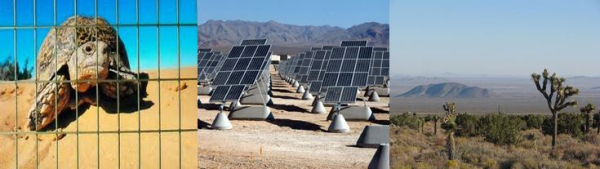
Here's a fence that you'll never ever see in your neighborhood! It takes concept of "fence" to new heights.

According to Lockheed Martin:

"Low-earth orbit is crowded with active satellites and thousands of pieces of debris due to collisions and deterioration of defunct satellites and rocket boosters. Traveling at speeds upwards of 15,000 mph, that debris threatens not only commercial satellites, which we depend on for everything from weather forecasting, banking, global communications and GPS navigation, but also military assets that help monitor and protect nations around the world."

Do you think fence is the right term to use for this project? Will this lead to a new definition of the word fence?

Shop Online Now

Read More

Topics: fence

Chicken Wire Fabrication - Video

January 26, 2011 | by Duncan Page

Chicken Wire in Production   

The video below shows how chicken wire mesh is woven. You can see how the wires are twisted together to make a hexagonal opening. Chicken wire is also known as poultry netting or hexagonal netting.


The Continuous Weave Creates Inherent Strength

This particular machine is weaving mesh used in making gabions. Although the mesh is larger (3") and the wires used are heavier (11 gauge and heavier) than the chicken wire you can buy at your local store, the manufacturing process is similar.

There is one difference. This machine is doing continuous weave -  the twisted wires run in the same direction the entire length of the twist. Chicken wire available in stores is made with a reverse twist - the twist switches direction (reverses itself) halfway through the length of the twist. Continuous weave is inherently stronger than reverse twist. Good to know.

Is this the first time you have seen a loom weaving chicken wire?

Hexagonal Netting

Read More

Topics: woven wire, hex netting, poultry netting, chicken wire

Deer Fence, Blueberries, and Increased Yield - Video

January 21, 2011 | by Duncan Page

Increasing Blueberry Yield

The 8' fence, angled to the outside of the blueberry patch, is easy to build and easy to move. Simple in design, this deer fence uses seven strands of wire.

And it cost him ¢.40 per foot to build!

Prior to building the fence, the patch typically yielded 3,500 pounds of berries. The season after he built the fence, the yield was up to 14,000 pounds!  Joe Wave of Wave's U-Pick Blueberries in Kaleva, Michigan talks about his innovative deer fence:

What do you think of this solution? Would it be something you'd want to use?
Have you seen other deer fences that differ from the 8' tall barriers that are most common?                   

DEER FENCE

Read More

Topics: high tensile wire, Fencing Tips, deer and wildlife fence

Wire Fence Roll Size--Pay Attention!

January 18, 2011 | by Duncan Page

 3 rolls of fence wire varying in size

How are these rolls of fence wire different? 


Which of these rolls of wire fence would you buy? Do they have the same footage? If they are the same, why do they look so different? Not all rolls are created equal.

The final diameter of a roll of welded or woven wire fence is determined by four things:

  • mesh opening size
  • the gauge of the wire used
  • the size of the spindle upon which it is wound
  • how tightly it is rolled at the end of the assembly line

In the example above, all three rolls of heavy woven wire fence are identical in mesh size, gauge, height, length, and weight. They even have the same core openings. And yet they appear to be completely different. The roll on the left is wound very tightly. It is almost half the diameter of the right-hand roll which is wound under less tension. If you were to buy one of these rolls, which would you choose? Would you prefer the smaller roll because it is more compact and easier to handle? Or would you choose the larger roll because it looks as if it has extra footage?

Checking the Weight

Different wire mills may have different size spindles. And they may roll their product under different tensions. So if you see wire fence products in the store that are labeled with the same gauge, mesh size, width, and length, they may look very different. A quick way to tell is to check the weight of each roll.

Imported wire fence is usually very tightly wound. Rolls have a small diameter hollow core. This saves space, allowing more rolls to fit on a pallet. Higher density per cubic foot enables more pieces to be loaded in a container, cutting the shipping cost per piece.

Have you ever encountered this when buying wire fence?  Which one did you buy and why?

Duncan Page signature

Duncan Page

Galvanized After Wire

galvanized welded wire in a roll on pavement

Read More

Topics: wire fence, woven wire, wire gauges, Fencing Tips

Request Your Quote Now. Get Fast Quotes.
Click here to shop our online store

Recent Posts

Subscribe to Email Updates