
Is it Time to Enhance Your Garden?
These videos will show you how you can build an attractive wood garden fence and an arbor in your yard.
Is it Time to Enhance Your Garden?
These videos will show you how you can build an attractive wood garden fence and an arbor in your yard.
Topics: garden fence, how to
Woven Mesh is Often Preferred
There are many different sizes of wire meshes that are available 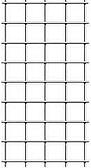 with small openings. Most often called hardware cloth, these meshes are usually welded using light gauge wire. After fabrication, the finished product is hot dipped in zinc. This Galvanized After process not only provides good protection against rust and
Until recently, Galvanized After woven meshes were as easy to obtain as the welded products. Woven mesh is not always exactly square due to the weaving process which can cause slight distortions resulting in a "wavy" mesh. Depending on the final application, woven products are often preferred over the welded meshes. They tend to be a bit heavier and stronger. They are also more costly.
Some Common Sizes
As the small opening wire mesh size gets smaller, so does the gauge or thickness of the wires. The more common sizes and wire gauges of square meshes are:
- 1/2" - also known as 2 x 2 and 2 mesh (2 squares per inch) 19 gauge wire
- 3/8" - also known as 3 x 3 and 3 mesh (approximately 3 squares per inch) 21 gauge wire
- 1/4" - also known as 4 x 4 and 4 mesh (4 squares per inch) 23 gauge wire
- 1/8" - also known as 8 x 8 and 8 mesh (8 squares per inch) 27 gauge wire
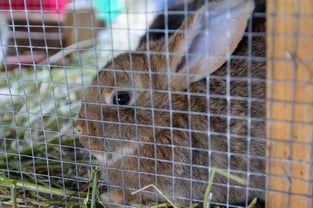
Galvanized After Mesh, Special Ordering There are many other Galvanized After mesh  sizes and gauges available as well. These are often called industrial wire cloth. They are woven, heavier, more expensive, and often must be special ordered. The more common sizes are:
- 5/8" - 17 gauge wire
- 3/4" - 16 gauge wire
In addition to galvanized products, the 1/2", 19 gauge and 1/4", 23 gauge mesh styles are available with a black PVC coating over the Galvanized After core wire.
These excellent and long lasting meshes can meet the requirements of many different projects and Louis Page can help you think through the various mesh types and possibilities. Simply call us at (866) 328-5018.
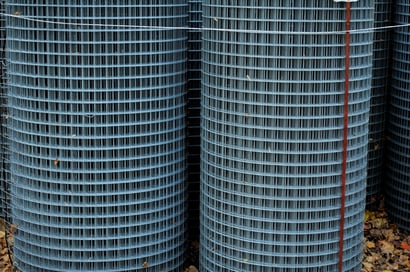
Topics: hardware cloth, welded wire mesh, woven wire
The Barrier Method
One way to fence in your garden to prevent deer from eating your plants - the horizontal barrier is the key here.
Topics: garden fence, deer fence

Those Nighttime raids
The destruction of beehives by marauding bears has become an increasingly troublesome problem with a significant economic impact, especially for commercial apiaries. Factors such as increased urbanization and the trend toward one crop agriculture reduce both bear habitat and bee "pasture". Even though bears are mostly limited to wilderness areas, their appearance in subdivisions has been increasing.
Bears normally visit apiaries at night. In the process of getting at the honey, hives and equipment are ripped apart and destroyed. Not only is the "crop" lost, but also the equipment necessary to collect it.
The Effective Barrier
The results of many tests and studies have demonstrated that an electrified fence is the most effective barrier. Single strands of wire with 6" to 8" spacing to a height of 42" to 48" works well. This type of fence is relatively inexpensive and is capable of operating in remote areas.
Using Bait for that Rascally Pooh
It is important to install the fence before bears have established a pattern of visiting the apiary. Bait, such as bacon strips or pork rind, should be attached to the wires. Bears will approach the bait, touch it with a wet nose or tongue and learn the characteristics of the fence. They will want to avoid it in the future. If the fence is not baited, a bear is likely to crash through the fence, paying no more attention to the shock than it would a bee sting.
Other Sites that Bears Enjoy
Apiaries are not the only areas feeling the pressure from bears. Landfills, food storage sheds, trashcans, and fruit orchards are some of the other areas seeing an increase in bear activity.
Have you had any close encounters with bears? Do you have other ideas for bear-proof fences?
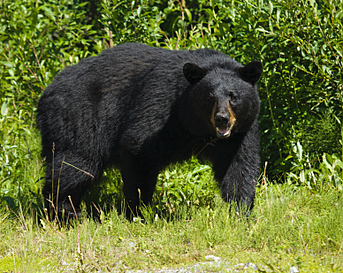
Topics: electric fence, apairy fence, bear fence
.jpg?width=239&name=daiga-ellaby-WTm7llmj4ro-unsplash%20(1).jpg)
The Major Players: Square Deal, Hinge Joint, Fixed Knot, and V-Mesh
Definitions
There are four types of knots currently in use to tie wires together to make woven wire fence mesh:
Square Deal - also known as S knot. This knot is used in making non-climb 2" x 4" mesh horse fence, 4" x 4" mesh sheep and goat fence, and some styles of field fence. The square deal knot prevents the fence from buckling or sagging. It also provides extra vertical strength and rigidity while at the same time allowing flexibility. This quality makes it ideal for installations over hilly terrain. One-piece vertical stay wires are tied to line wires and crimped at the joint to prevent slippage.


Hinge Joint - also known as Monarch, used most commonly in field and farm fences. This knot acts as a hinge. It gives under pressure, then springs back into shape. Monarch fence is easy to install because the hinge gives the mesh flexibility. The fence always retains its full height for continuing protection and good looks. Vertical wires are individually cut and wrapped for maximum strength and flexibility.

Fixed Knot - also known as Solidlock. Fixed-knot  construction is most commonly found in deer and wildlife fences but is also being used in more common farm and field fence styles. This design securely locks the line wire and stay wires together, giving you the strength you need. Vertical stay wires are one piece and cannot unwind under pressure. The inherent flexibility of this design allows the fence to conform to terrain.
V-Mesh - often used with fencing horses, it can also be used for dogs and a variety of livestock. Extremely solid, but flexible; resistant to breakage--gives with animal impacts. Can be used with wooden posts or T posts and on level or hilly terrain. Resistant to climbers and difficult to get a hoof tangled up.
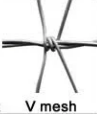

Topics: wire mesh, woven wire




1 Main St Whitinsville, MA 01588 (Limited pickup in Whitinsville)
978-486-3116
8:30 to 4:30 (EST) Mon through Fri