Serving USA & Canada | 978‑486‑3116 | Current pricing valid through October 1, 2024 due to ongoing tariff and vendor rate changes. Order now to lock in current rates before the next update.

Call our team at Louis Page: 978-486-3116 | Free Quote

The Fence Post

Duncan Page

Recent Posts

What Is A Drift Fence?

December 2, 2009 | by Duncan Page

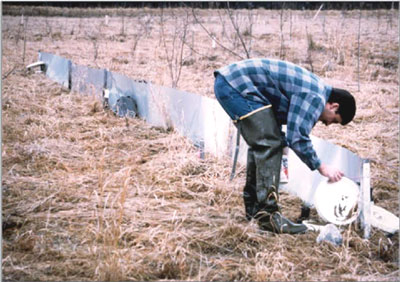
man in waders setting up a drift fence

A New Law to Protect Cattle

According to Wikipedia "drift fences were used in the Texas Panhandle from 1882 to 1887 to control cattle drift, the winter migration of livestock to warmer territory." In an effort to prevent cattle in Oklahoma, Colorado, and Kansas from crossing into the state during blizzards, Texas ranchers built a barbed wire drift fence that stretched for 200 miles with a gate every three miles.

The drift fence prevented cattle from migrating to better grazing land during the heavy snows of the 1886-87 winter. Most froze to death along the fence. It was removed in 1890 after passage of a law prohibiting fencing of public property.

A Changed Application

Drift fences are still in use today but the application has changed. The long continuous barriers are one of the most effective techniques to sample wildlife species in a particular area to learn such things as population density. Reptiles and amphibians, insects and small mammals are often the subjects studied. When the animals come upon the fence, they move along looking for an opening. Many can be captured in a single night, when many species are most active and hard to observe.

Strategy for Placement

Different materials are used to make the fences. They can be strategically placed in areas with different ecosystems where wildlife movement is most active. Depending on the location, metal flashing or silt fence might be used. Various types of traps, such as pitfall and funnel, are used along the fence to capture subjects. Hundreds can be collected in a single night.

Here's an excellent example, though a bit slithery:

Drift fence is an example of a type of fence that retains the original name while its application has changed over the years. Can you imagine an application that might serve your needs?

 panorama of fields and clouds

Read More

Topics: fence, drift fence

Concrete Fence Posts

November 30, 2009 | by Duncan Page

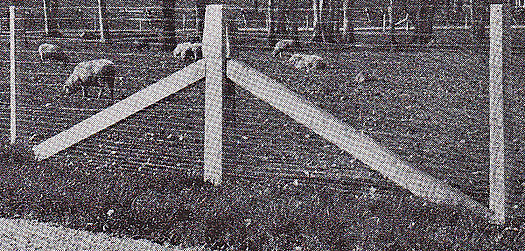
concrete posts & braces

Quite a Few Advantages

In a 1925 booklet, the Portland Cement Association praises the superior qualities of concrete fence posts. Apparently at that time these posts were becoming very popular for several reasons. Concrete posts:

  • become stronger with age
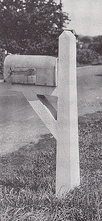
  • are not damaged by fireconcrete mailbox post
      • weeds along the fence line can be burned without damaging posts
  • are not affected by weather, insects or fungi
  • will not rot
      • reducing expense and time of replacement
  • are uniform in size and shape
      • easy to line up and set for an attractive appearance
  • stay put

Concrete fence posts are fairly easy to make. Their final shape will be determined by the molds used. Wood or metal molds are acceptable. At the time the booklet was printed, metal molds for posts were available to purchase. Reinforcement rods are required for strength.

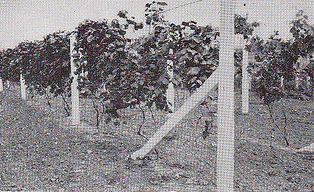
Concrete posts were used extensively by some of the railroads for their right of way fences. Use by farmers quickly followed. They were recommended as ideal permanent posts for vineyards to support grapevines. It was claimed that they would outlast the vineyard.

concrete vineyard posts

Providing Style with Substance

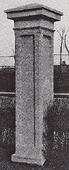
Corner and gate posts were often made on site due to the increased size and weight required to resist the tension and bear the weight. Angle braces to give the fence rigidity can also be made of concrete.concrete gate post

It is possible to make elaborate and decorative posts. The forms or molds can be made with interesting angles. Laying small stones against the form face in the mold gives the posts an interesting texture.

Are concrete posts a thing of the past, when "Spare time can be profitably used in making them?"

Would attractive concrete posts be of interest today?

Would you want concrete posts surrounding your garden or property?

Here's a formidable woman setting some posts:


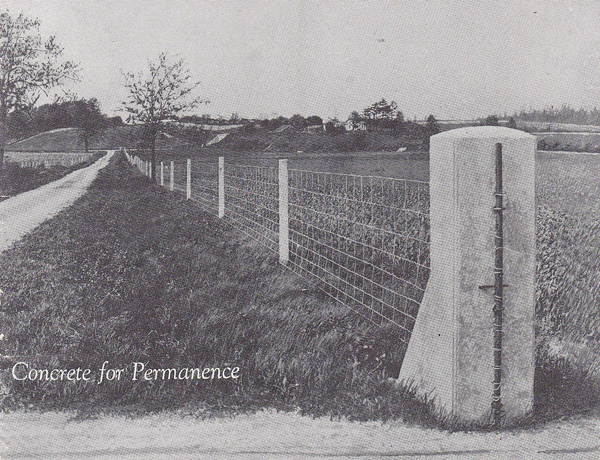
concrete posts along lane with field


Read More

Topics: concrete fence posts

What Is A Bra Fence?

November 23, 2009 | by Duncan Page

Wonders to Behold in the Cardrona Valley 

In early 1999, four women's bras were attached to a wire fence along a road in rural New Zealand. The local land owner left the bras on the fence. News spread and The Cardrona Bra Fence quickly became a controversial tourist attraction. By the end of February 60 bras had been hung.

Shortly thereafter someone took on the task of removing all the bras from the fencing. The local press got wind of the story and the news spread throughout New Zealand. Bras soon began to reappear on the fence. By October 2000 the total number of bras reached 200.

Once again all the bras were removed. When this was reported by the press the news spread far beyond the shores of New Zealand. The Cardrona Valley now had a genuine tourist attraction. Not only did people come in person to hang bras, but also people sent bras from other areas to be hung. By 2006 the number of bras on the fence approached 800.

Brassiere Reaction

The Cardrona Bra Fence received mixed reviews from the local population. Some saw it as a potential hazard, distracting motorists. Some considered it a tourist attraction, bringing people to the area. Others felt strongly that it was a blot on the rural landscape. Some even claimed that the fence might offend visitors from other cultures.

In April of 2006, after several legal attempts to have all bras stripped from the fence, The Cardrona Bra Fence was declared a "traffic hazard" and an "eyesore". By September, when the local council finally took action, 1,500 were removed. The fence itself is still in place. Without its bras, some may now look upon it as a naked fence.

How would you feel about a bra fence being in your area?

Would you see it as an "eyesore"?

Would you welcome it as an unconventional tourist attraction?


Read More

Topics: fence

How To Make Papercrete Fencing - Video

November 18, 2009 | by Duncan Page


Could be next on your list of projects?

Have you ever heard of a fence made out of papercrete?

What exactly is papercrete? This video will show you how to make a 4' by 8' section of fencing - real DIY stuff, folks.


The ingredients for papercrete--roughly.

  • 30 pounds of concrete
  • 18 pounds of joint compound
  • 1 pound of boric acid
  • 90 pounds of newspapers
  • Just add water and you're good to go!

But would you really want a papercrete fence around your house?


Read More

Topics: fence, how to

Living Snow Fencing - An Alternative To Wood & Plastic Snow Fence

November 16, 2009 | by Duncan Page

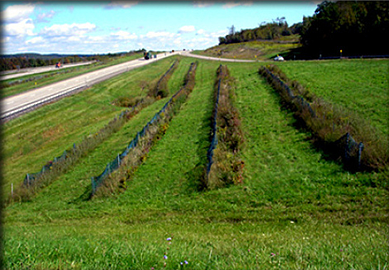
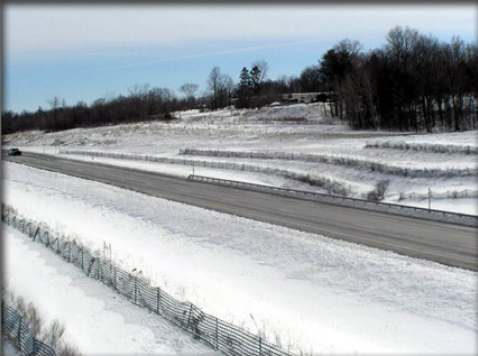
living snow fence  - summer     living snow fence  - winter      

Strong winter winds can cause dangerous driving conditions. Not only does blowing snow dramatically reduce visibility but also treacherous drifts can accumulate across roadways and other open unprotected areas.

A Natural Barrier

Several states have successful programs in place using living snow fence. The Iowa DOT has been developing and improving theirs for over 40 years. Living snow fencing is a natural barrier created by planting a combination of shrubs, trees and grasses that act as a windbreak. In Iowa, rows are five feet apart and shrubs are set three feet apart within the row. Plantings are arranged so that the gaps in one row are filled by the plants in the next row.  As the speed of the wind is disrupted and decreased, snow settles among and downwind from the plantings. Research shows that drifts will form downwind 10 to 12 times the height of the trees (100 to 120 feet downwind from a 10 tree). A concentrated and closely spaced placement of trees and shrubs results in shorter and deeper drifts.

When positioned properly, living snow fences can greatly reduce the amount of plowing needed to keep roads open for travel. Winter travel is safer.


Native Species with Reduced Erosion 

There are benefits in addition to safety when living snow fencing is used:

  • Highway beautification is enhanced with native species of plants.
  • Environmental stewardship is promoted.
  • Trees, shrubs and grasses are excellent wildlife habitat all year.
  • Living snow fences slow and reduce erosion.
  • When measured during winter months the temperature of the pavement surface in areas protected by living snow fence were higher than the surface temperature in unprotected areas.
  • In areas with severe cold, this greatly increases the effectiveness of chemicals used to prevent icing.
  • It is no longer necessary to install and remove wood or plastic snow fence.

If you live in an area that gets lots of snow, what type of snow fence does the DOT use?

Wood, plastic or natural living snow fence: which type of snow fencing would you prefer to see?

Interested in other types of living fence? Read our blog article Living Fencing.

- photos from NYSDOT

Read More

Topics: snow fence

Request Your Quote Now. Get Fast Quotes.
Click here to shop our online store

Recent Posts

Subscribe to Email Updates